


Can't Afford Wheelchair Home Modifications? Where to Look for Help in New Jersey

When your home no longer works for you, the cost of making it accessible can feel overwhelming.
Maybe your wheelchair won't fit through the bathroom door. Maybe getting into the shower has become unsafe. Or maybe you're wondering if you'll have to move because your home no longer meets your needs.
If you've found yourself asking these questions, you're not alone.
The good news is that paying out of pocket or moving isn't always your only option. Depending on your situation, there may be resources, programs, or legal protections that can help. The first step is understanding what options are available.
How Can an Independent Living Program Help?
Many people think Independent Living Programs are only for finding housing or helping people apply for benefits. In reality, they're designed to help people with disabilities overcome barriers that make everyday life more difficult.
At the Progressive Center for Independent Living (PCIL), Independent Living Specialists work alongside consumers to identify challenges, explore solutions, and provide advocacy, information, and support so individuals can make informed decisions about their own lives.
Depending on a person's needs, Independent Living services may include:
Identifying barriers that limit independence at home or in the community
Explaining disability rights and reasonable accommodations
Helping consumers navigate complex systems and requirements
Assisting with paperwork and supporting documentation
Connecting individuals with community resources and services
Advocating alongside consumers to help remove barriers to independence
The goal isn't to tell someone what to do. It's to provide the knowledge, tools, and support people need to make their own choices and live as independently as possible.
Sometimes the Solution Is Knowing Your Rights
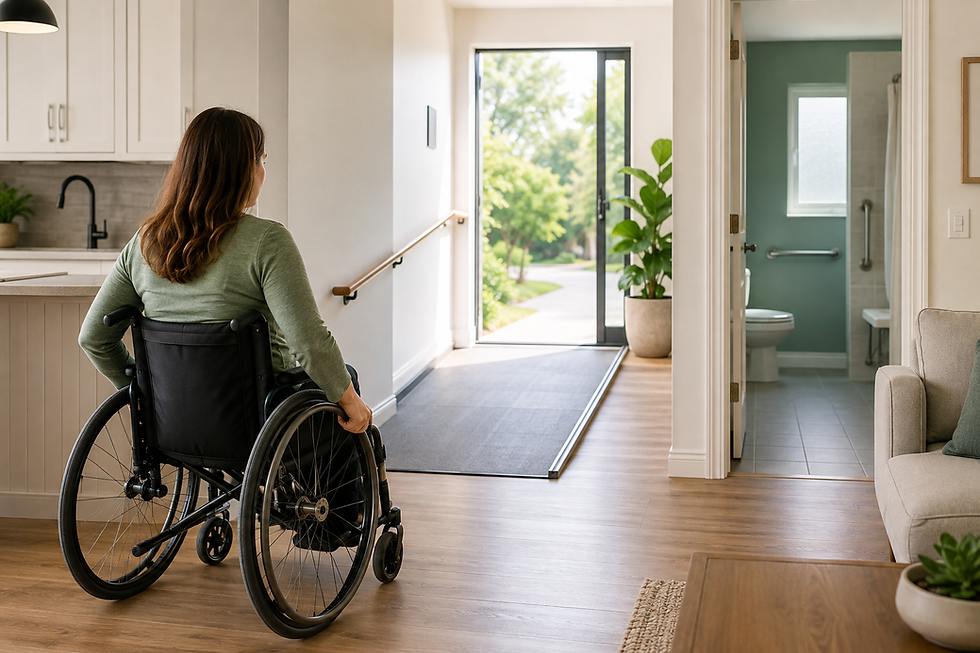
Linda lived in HUD-assisted housing and had spent years living with accessibility barriers. The narrow doorways in her apartment repeatedly damaged her wheelchairs, and she believed moving was her only option because she didn't know she could request accessibility modifications to the home she already lived in.
After connecting with PCIL's Independent Living Program, Linda learned about her rights to request reasonable accommodations and modifications.
PCIL helped her understand the process, obtain the necessary medical documentation from her healthcare providers, prepare the required paperwork and correspondence, and advocate throughout the process with HUD and her housing management office.
Once the appropriate documentation was submitted, the modification process was able to move forward. Linda's apartment was modified with wider doorways, a roll-in shower, and other bathroom accessibility improvements, making her home safer, more accessible, and better suited to her needs.
Linda's story is a reminder that sometimes the solution isn't paying out of pocket or relocating. Sometimes it's understanding your rights and having someone help you navigate a process that can feel overwhelming on your own.
Places to Look for Help in New Jersey
There isn't one program that pays for every home modification, but these are some of the places worth exploring if you need accessibility improvements.
New Jersey Division of Vocational Rehabilitation Services (DVRS)
If home modifications are necessary to help you prepare for, obtain, or maintain employment, DVRS may be able to provide assistance as part of an approved employment plan.
Learn more: https://www.nj.gov/labor/career-services/special-services/individuals-with-disabilities/
New Jersey Division of Developmental Disabilities (DDD)
If you qualify for DDD services, your individualized service plan may include supports that promote greater independence, depending on your needs.
Learn more: https://www.nj.gov/humanservices/ddd/
Veterans Benefits
Veterans with qualifying service-connected disabilities may be eligible for grants to help make their homes more accessible
Local Nonprofits and Community Organizations
Some nonprofit organizations, faith-based groups, and community charities offer accessibility grants, donated labor, or other forms of assistance. Programs vary by community, but it's always worth asking what resources may be available.
Centers for Independent Living
Many people don't realize that Centers for Independent Living provide free services to help people with disabilities remain as independent as possible.
While Centers for Independent Living don't typically pay directly for home modifications, they can help people understand their rights, identify possible resources, navigate complex systems, advocate for accessibility, and connect with services that support greater independence.
If you live in Mercer County or Hunterdon County, New Jersey, the Progressive Center for Independent Living (PCIL) provides these Independent Living services at no cost.
Don't Assume You Have to Figure It Out Alone
One of the biggest mistakes people make is assuming there isn't any help available.
Whether you're facing accessibility barriers in your home, trying to understand your rights, or looking for resources, reaching out for guidance can open doors you didn't know existed.
Every program has different eligibility requirements, and every situation is unique. What isn't possible through one resource may be available through another.
The important thing is knowing where to start.
If you live in Mercer County or Hunterdon County and aren't sure what your next step should be, PCIL's Independent Living Program can help you understand your options, navigate the process, and work toward solutions that support your independence.
Programs and eligibility requirements change over time. Contact each organization directly for the most up-to-date information about available services and funding.


Comments