


Can I Work Without Losing My Disability Benefits? What New Jersey Residents Should Know
Updated: 3 days ago
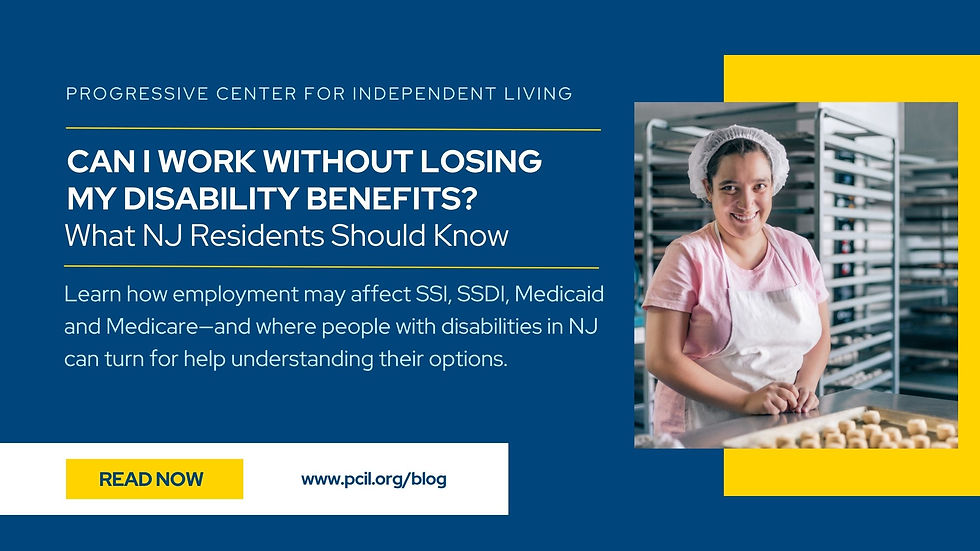
Every October, National Disability Employment Awareness Month (NDEAM) recognizes the contributions of people with disabilities in the workplace. The 2026 theme, “Celebrating Value and Talent,” highlights something worth remembering: people with disabilities bring skills, experience, ideas, and talents to workplaces throughout New Jersey and across the country.
But for someone receiving disability benefits, deciding whether to work can come with a very practical concern:
What will happen to my benefits if I get a job?
Will you lose your SSI or SSDI?
What happens to Medicaid or Medicare?
What if you try working and it doesn't work out?
These questions can make employment feel like a financial risk. The good news is that receiving disability benefits does not necessarily mean you can't work. Social Security has special rules called work incentives that can help people with disabilities explore employment while protecting certain benefits.
The key is understanding how the rules apply to your situation before making decisions about your work or earnings.
First, Know Which Disability Benefits You Receive
SSI and SSDI sound similar, but they are different programs with different rules.
Social Security Disability Insurance (SSDI) is generally based on a person's work history or, in some circumstances, the work record of a parent or spouse.
Supplemental Security Income (SSI) is based on financial need and is available to eligible people with limited income and resources.
Some people receive both.
That distinction matters when you begin working. Advice like, “You can make this much money without losing your benefits,” may not apply to you. How employment affects your benefits can depend on which program you receive, how much you earn, where you are in the work process, and other details about your individual situation.
Working Doesn't Always Mean Your Benefits Stop
Social Security has several work incentives designed to help eligible people receiving SSI or SSDI explore employment.
For people receiving SSDI, one of these is the Trial Work Period. This allows eligible beneficiaries to test their ability to work for at least nine months while continuing to receive their full SSDI payment, regardless of how much they earn during those months, as long as they continue to meet Social Security's disability requirements and report their work.
SSI works differently. As someone's earnings increase, their SSI payment may decrease rather than simply disappearing the moment they begin working. Other work incentives may also help eligible individuals account for certain disability-related expenses or pursue education, training, or employment goals.
The specific rules can get complicated quickly.
The important takeaway is simpler: getting a job does not automatically mean losing all of your disability benefits.
What About Medicaid or Medicare?
For many people with disabilities, health coverage is an even bigger concern than the monthly cash benefit.
Medicaid or Medicare may help cover medications, medical equipment, personal assistance, therapies, doctor visits, and other services that are important to living independently. Understandably, someone may hesitate to work if they believe earning a paycheck will mean losing that coverage.
There are protections that may allow eligible people with disabilities to continue Medicaid or Medicare coverage while working.
New Jersey also has NJ WorkAbility, a Medicaid program for eligible working people with disabilities. The program is designed to allow people with disabilities to earn income from employment while maintaining Medicaid coverage if they meet program requirements.
This is another reason not to assume that working automatically means losing healthcare coverage.
What Happened to Someone Else May Not Apply to You
Benefits rules are complicated, and everyone's circumstances are different.
A friend may tell you they can only work a certain number of hours. Someone in an online group may warn you never to earn more than a specific amount. A family member may tell you that accepting a job will make you lose Medicaid.
They may be describing their experience correctly. That doesn't mean the same rule applies to you.
The effect of employment can depend on the type of benefits you receive, your earnings, healthcare coverage, disability-related work expenses, and other factors.
Before turning down a job, limiting your hours, or deciding that employment isn't possible, consider talking with someone who can look at your actual benefits.
Benefits Counseling Can Help You Understand Your Options
Benefits counseling is designed to help people with disabilities understand how employment could affect the benefits they receive.
In New Jersey, the Division of Vocational Rehabilitation Services (DVRS) offers Benefits Counseling Services for eligible consumers who receive SSI or SSDI. A certified benefits planner can help someone understand how work may affect cash and medical benefits, identify work incentives that may apply, understand wage-reporting responsibilities, and consider different employment and earnings scenarios.
Social Security's Work Incentives Planning and Assistance (WIPA) program also provides free benefits counseling to eligible Social Security disability beneficiaries.
The purpose isn't to convince you to work or tell you how much you should work. It's to give you accurate information so you can make an informed decision about your own employment goals.
Employment Is About More Than a Paycheck
National Disability Employment Awareness Month is an opportunity to celebrate the value and talent people with disabilities bring to the workforce. It's also an opportunity to recognize the barriers that can make employment more complicated.
For some people, fear of losing disability benefits is one of those barriers.
Employment can offer more than additional income. Depending on the individual, it can provide opportunities to build skills, develop a career, meet people, contribute to the community, and increase independence.
That doesn't mean employment will look the same for everyone. Some people may want full-time careers. Others may prefer part-time work, supported employment, self-employment, or opportunities that fit around other needs and priorities.
Independent Living is about having the information, resources, and support needed to make those choices for yourself.
Thinking About Working? Start With the Facts
If you're receiving disability benefits and considering employment, you don't have to figure out the rules on your own.
Start by identifying exactly which benefits you receive. Ask how employment could affect both your cash benefits and healthcare coverage. Learn about the work incentives that may apply to you, and get individualized benefits counseling before making important decisions based on assumptions or someone else's experience.
For people with disabilities in Mercer County and Hunterdon County, New Jersey, the Progressive Center for Independent Living (PCIL) can help connect consumers with employment, benefits, Independent Living, and other community resources that support their individual goals.
This National Disability Employment Awareness Month, celebrating the value and talent of people with disabilities also means making sure people have the information they need to explore what's possible.
Don't let fear of losing your benefits make the decision for you. Start with accurate information and decide what works for your life.
Benefits programs, eligibility requirements, income limits, and work incentives can change. This article provides general information and is not individualized benefits advice. Contact Social Security, New Jersey DVRS, NJ FamilyCare, or a qualified benefits counselor for information about your specific circumstances.


Comments